
Epididymal Cyst Removal
Treatment for epididymal cysts, including surgical removal when needed for symptoms or reassurance.
Epididymal Cyst Removal
What is epididymal cyst removal?
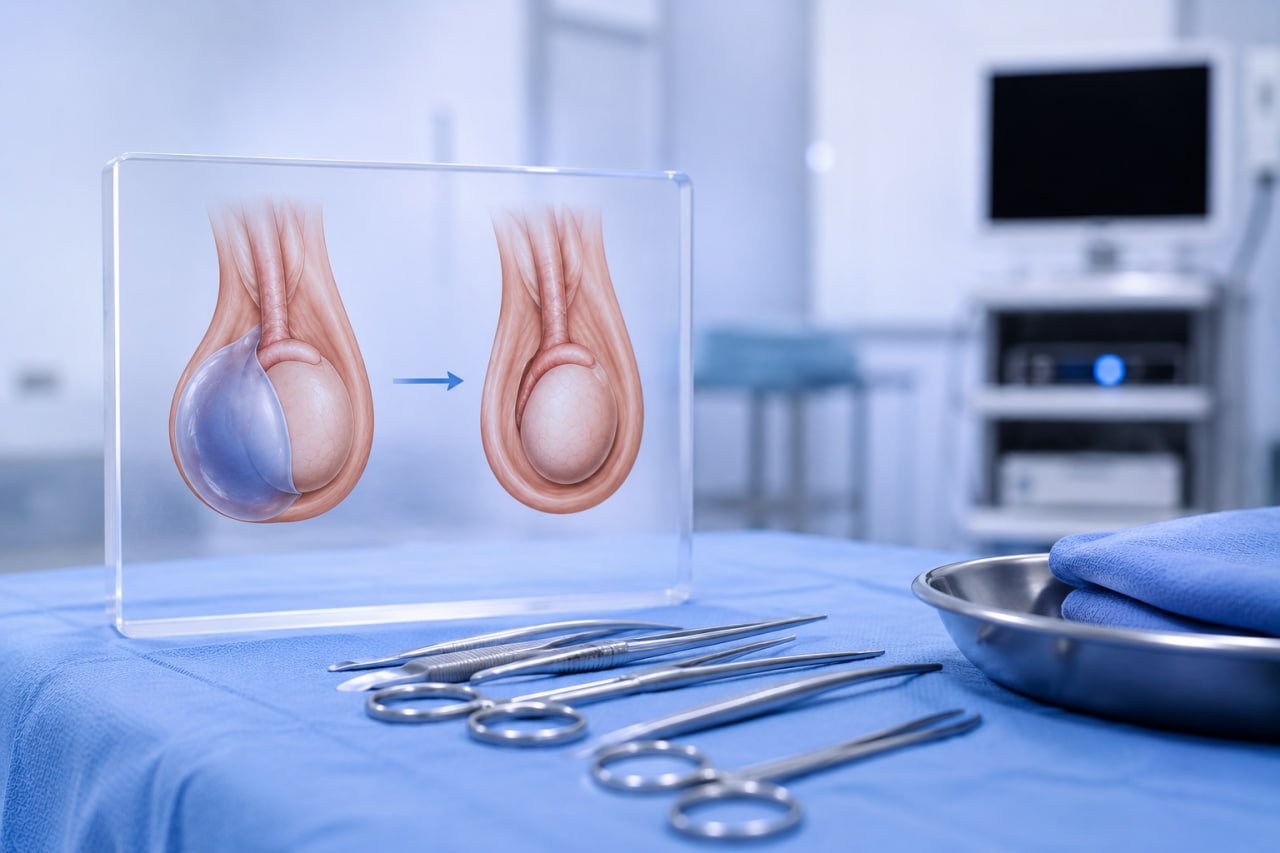
Epididymal cyst removal is a surgical procedure performed to remove a fluid-filled cyst arising from the epididymis — the small structure located behind the testicle that stores and transports sperm. These cysts are usually benign and harmless, but may become uncomfortable, enlarge over time, or cause concern.
The operation is performed through a small incision in the scrotum under general anaesthetic. The cyst is carefully separated from surrounding structures and removed while preserving the testicle and surrounding tissue.
The procedure is commonly performed as a day-case operation.
Indications for epididymal cyst removal
Surgery may be recommended for patients with:
- Persistent scrotal swelling
- Pain or discomfort from the cyst
- Increasing size of the cyst
- Cosmetic concerns
- Uncertainty regarding the diagnosis
- Interference with daily activities or exercise
Advantages of having epididymal cyst surgery performed privately
- Rapid access to specialist consultation and surgery
- Consultant-led care throughout treatment
- Day-case procedure in most cases
- Personalised follow-up and continuity of care
- Reduced waiting times and flexible appointments
- Modern surgical techniques focused on recovery and comfort
Possible side effects and risks
As with any surgical procedure, there are potential risks and complications, including:
- Swelling or bruising of the scrotum temporarily
- Mild postoperative pain or discomfort
- Bleeding or haematoma formation
- Wound infection
- Recurrence of the cyst
- Scarring around the epididymis
- Effects on fertility if damage to the sperm-carrying structures occurs (uncommon)
- Chronic scrotal discomfort or sensitivity (rare)
Recovery and what to expect
Most patients return home the same day. Mild swelling and bruising are common during recovery and usually improve over several weeks. Supportive underwear and avoiding strenuous activity or heavy lifting for a short period are recommended.
Most patients return to normal daily activities within 1–2 weeks, although complete healing may take slightly longer. Follow-up appointments are arranged to monitor recovery and wound healing.