
Robotic Ureteric Re-implantation
A minimally invasive robotic procedure to treat ureteric obstruction and reflux, restoring normal kidney drainage.
Robotic Ureteric
Re-implantation
What is robotic ureteric re-implantation?
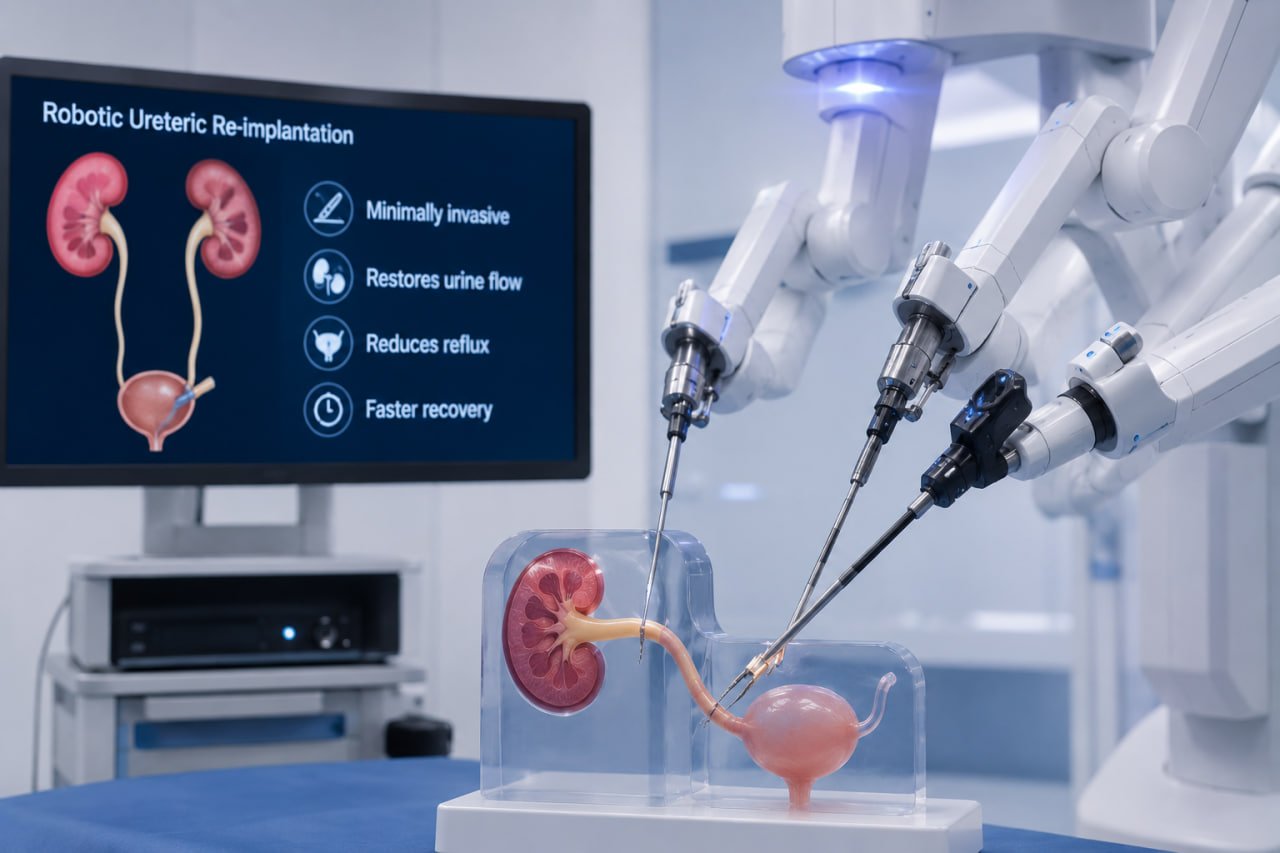
Robotic ureteric re-implantation is a minimally invasive surgical procedure used to repair or reposition the ureter, the tube that carries urine from the kidney to the bladder. The operation is performed using robotic-assisted keyhole surgery through small incisions, allowing enhanced precision and delicate reconstruction.
The procedure usually involves removing or bypassing a narrowed, scarred, or damaged section of the ureter and reconnecting the healthy ureter to the bladder. In some cases, additional techniques may be used to reduce tension on the repair and improve healing.
Indications for robotic ureteric re-implantation
This procedure may be recommended for patients with:
- Ureteric stricture (narrowing of the ureter)
- Injury to the ureter following previous surgery or stone treatment
- Blockage causing kidney swelling (hydronephrosis)
- Recurrent urinary tract infections related to ureteric obstruction
- Vesico-ureteric reflux (backflow of urine from the bladder to the kidney) in selected adults
- Persistent ureteric obstruction not suitable for endoscopic treatment
Advantages of robotic surgery performed privately
- Consultant-led specialist care throughout treatment
- Advanced robotic assisted minimally invasive surgery
- Smaller incisions with reduced postoperative pain
- Potential for shorter hospital stay and faster recovery
- High precision reconstruction techniques
- Personalised follow-up and continuity of care
- Reduced waiting times for investigations and surgery
Possible side effects and risks
As with any surgical procedure, robotic ureteric re-implantation carries some risks. These include:
- Bleeding or infection
- Temporary discomfort around the surgical wounds
- Urinary tract infection
- Leakage from the site of ureteric repair
- Narrowing or recurrence of the blockage in the future
- Need for a temporary ureteric stent during healing
- Injury to surrounding structures (rare)
- Conversion to open surgery if required (uncommon)
- Blood clots in the legs or lungs (rare)
Recovery and what to expect
Most patients stay in hospital for 1–3 nights following surgery. A temporary urinary catheter and internal ureteric stent are commonly used during the healing process. The stent is usually removed several weeks later during a simple outpatient procedure.
Patients are encouraged to walk soon after surgery, although heavy lifting and strenuous activity should be avoided for several weeks. Follow-up imaging may be arranged to confirm successful drainage of the kidney and healing of the repair.