
Robotic Bladder Surgery (Da Vinci Robot)
Advanced robotic urology surgery in Manchester, offering precision treatment for bladder cancer and diverticulum with faster recovery.
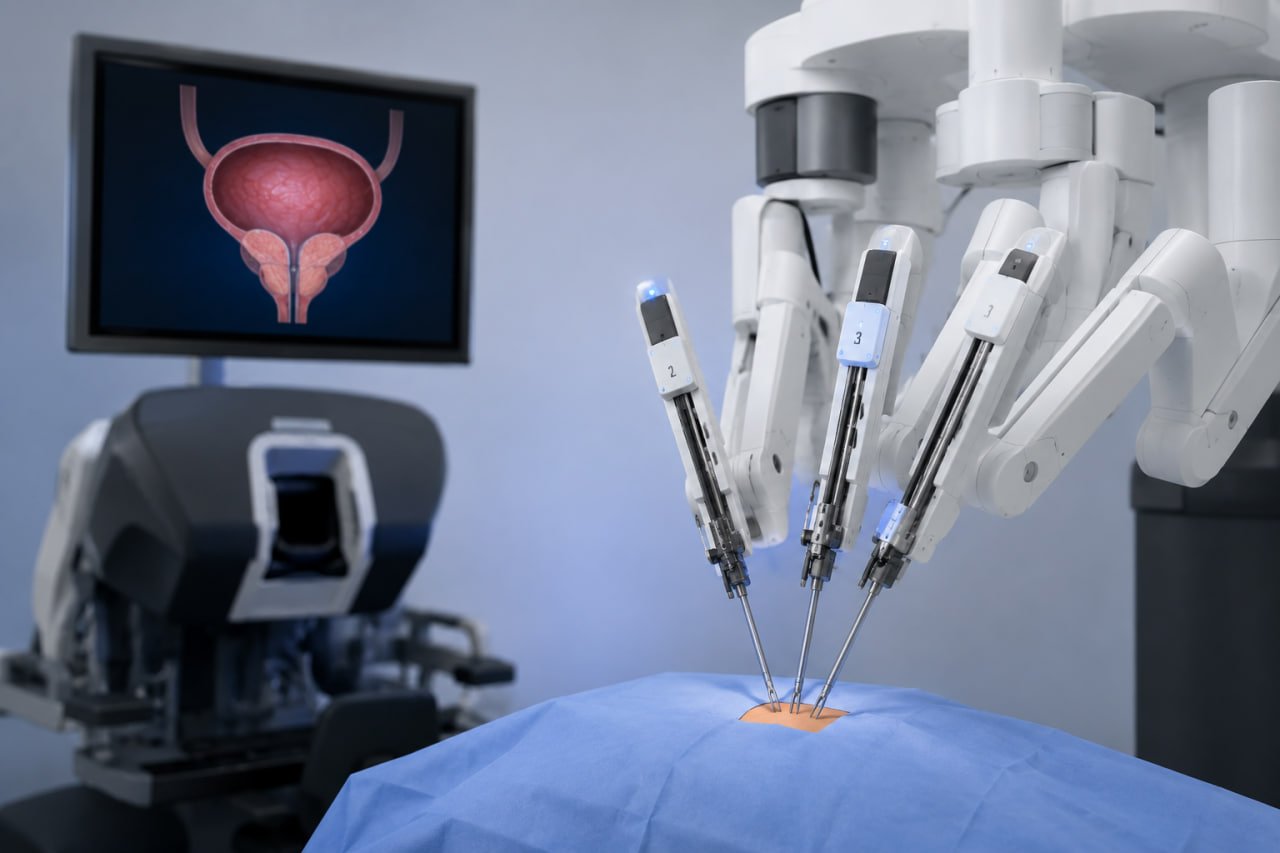
Robotic Bladder Surgery (Da Vinci Robot)
Robotic Radical Cystectomy and Urinary Reconstruction
(Bladder Removal with Ileal Conduit or Neobladder Reconstruction)
What is robotic bladder removal surgery?
Robotic radical cystectomy is a major operation performed to remove the bladder, most commonly for bladder cancer. The procedure is carried out using robotic-assisted keyhole surgery, which allows greater precision through small incisions and may help reduce pain and recovery time compared with traditional open surgery.
Because the bladder is removed, a new way of storing and passing urine must be created. This is known as urinary reconstruction or urinary diversion. The two most common options are an ileal conduit or a neobladder.
Ileal Conduit
An ileal conduit uses a short section of bowel to create a passage for urine to drain from the kidneys to an opening on the abdominal wall (stoma). Urine is then collected in a discreet external bag attached to the skin.
Neobladder
A neobladder is an internal bladder replacement created from a section of bowel. It is connected to the urethra, allowing selected patients to pass urine in a more natural way.
The most suitable reconstruction option depends on the type of cancer, overall health, kidney function, previous surgery, and patient preference.
Indications for robotic radical cystectomy
This surgery may be recommended for patients with:
- Muscle-invasive bladder cancer
- High-risk or recurrent non-muscle invasive bladder cancer
- Bladder cancer not responding to other treatments
- Certain rare or aggressive bladder conditions
- Selected cases of severe bladder dysfunction or damage
Advantages of robotic surgery performed privately
- Consultant-led specialist care throughout treatment
- Access to advanced robotic surgical technology
- Smaller incisions and minimally invasive approach
- Potential for reduced blood loss and faster recovery
- Personalised treatment planning and follow-up
- Reduced waiting times for surgery and investigations
- Multidisciplinary cancer care with continuity of care
Possible side effects and risks
This is a major operation and carries significant risks, which will be discussed carefully during consultation. Possible risks include:
- Bleeding or need for blood transfusion
- Infection or wound complications
- Blood clots in the legs or lungs
- Temporary bowel slowing or bowel obstruction
- Leakage from bowel or urinary connections
- Erectile dysfunction in men
- Changes in fertility and sexual function
- Urinary leakage or difficulty emptying the neobladder
- Stoma-related complications with an ileal conduit
- Vitamin deficiencies or metabolic changes over time
- Need for further procedures or long-term follow-up
Recovery and what to expect
Patients usually remain in hospital for several days following surgery. Recovery from major pelvic surgery takes time, and most patients gradually return to normal activities over 6–12 weeks.
Specialist nurses provide support and education regarding stoma care or neobladder management. Follow-up appointments are important to monitor recovery, kidney function, cancer surveillance, and long-term urinary function.
The choice between an ileal conduit and neobladder is highly individual, and all options, benefits, and limitations will be discussed carefully to help patients make an informed decision.
Advanced robotic urology surgery, offering precision treatment for bladder cancer and diverticulum with faster recovery.