
Cystoscopy and TURBT (Bladder Tumour Removal)
We perform flexible cystoscopy, bladder biopsy, and TURBT procedures for diagnosis and treatment of bladder tumours.
Cystoscopy and TURBT (Bladder Tumour Removal)
What is TURBT ( Transurethral resection of Bladder Tumour)?
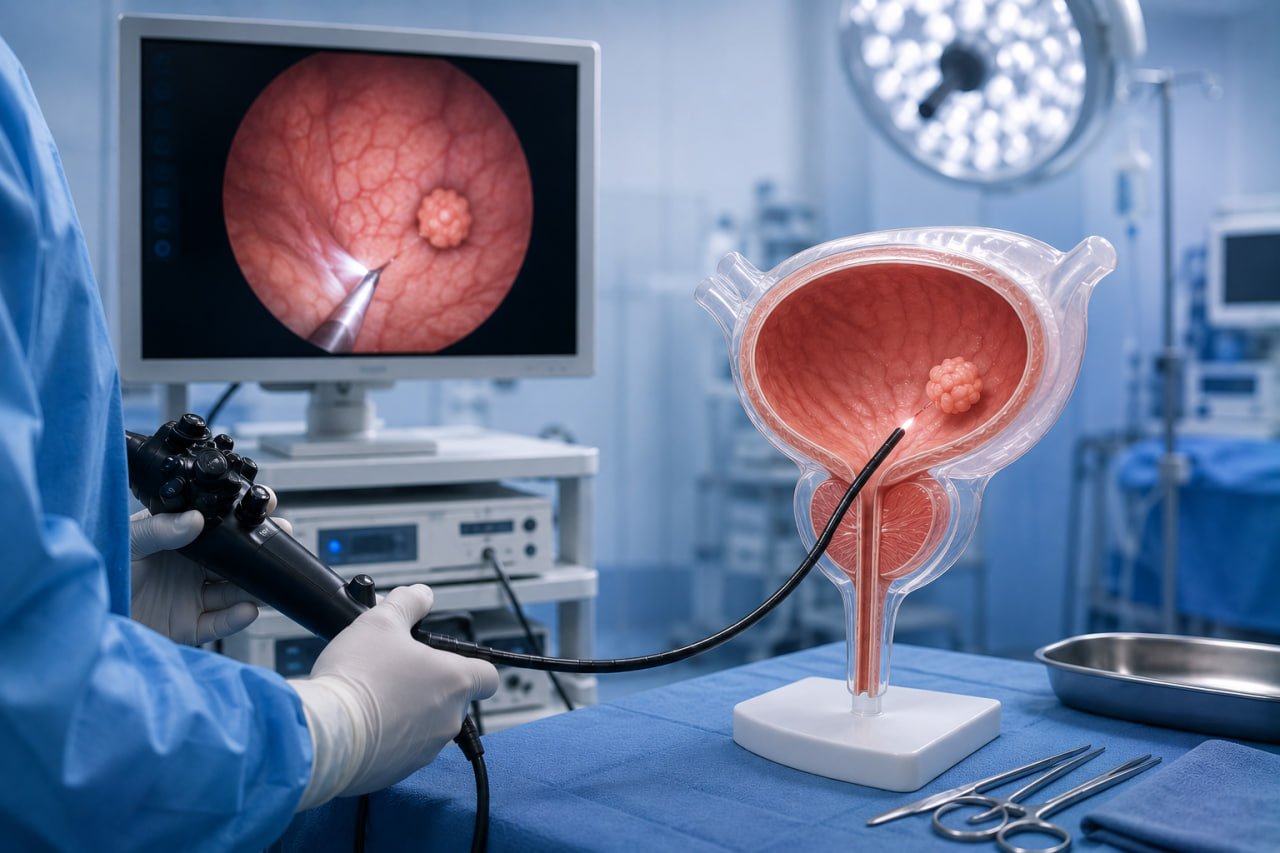
TURBT is a procedure used to diagnose and treat abnormal growths or tumours inside the bladder. The operation is performed using a small camera and surgical instruments passed through the urethra (water pipe), meaning there are no external cuts or scars.
During the procedure, the bladder tumour is carefully removed and sent for laboratory analysis. The results help determine the type of tumour, whether it is cancerous, and whether any further treatment is required.
TURBT is usually performed under general or spinal anaesthetic and often requires a short hospital stay.
Indications for TURBT
A TURBT may be recommended for patients with:
- Blood in the urine (haematuria)
- Abnormal findings on bladder scan or cystoscopy
- Suspected bladder tumour or bladder cancer
- Recurrent bladder tumours requiring treatment
- Urinary symptoms associated with a bladder lesion
Advantages of having TURBT performed privately
- Rapid access to investigation and treatment
- Consultant-led care throughout diagnosis and management
- Early assessment and treatment of concerning symptoms
- Personalised follow-up and continuity of care
- Reduced waiting times for surgery and pathology results
- Access to modern diagnostic and surgical techniques
Possible side effects and risks
As with any surgical procedure, TURBT carries some risks. Possible side effects and complications include:
- Burning or discomfort when passing urine temporarily
- Blood in the urine after surgery
- Urinary tract infection
- Temporary urinary frequency or urgency
- Bleeding requiring bladder irrigation or further treatment
- Perforation (small hole) in the bladder wall (rare)
- Temporary difficulty passing urine
- Recurrence of bladder tumours requiring future surveillance or treatment
Recovery and what to expect
Most patients go home the same day or after an overnight stay, depending on the extent of treatment. A temporary urinary catheter may be required for a short period after surgery. Mild bleeding and urinary discomfort are common during recovery and usually improve within several days. Patients are encouraged to drink plenty of fluids and avoid heavy lifting for a short period after the procedure. Follow-up is important to discuss biopsy results and determine whether any additional treatment or surveillance is needed.