
Hydrocele Surgery
We offer hydrocele repair surgery to treat scrotal swelling and discomfort safely and effectively.
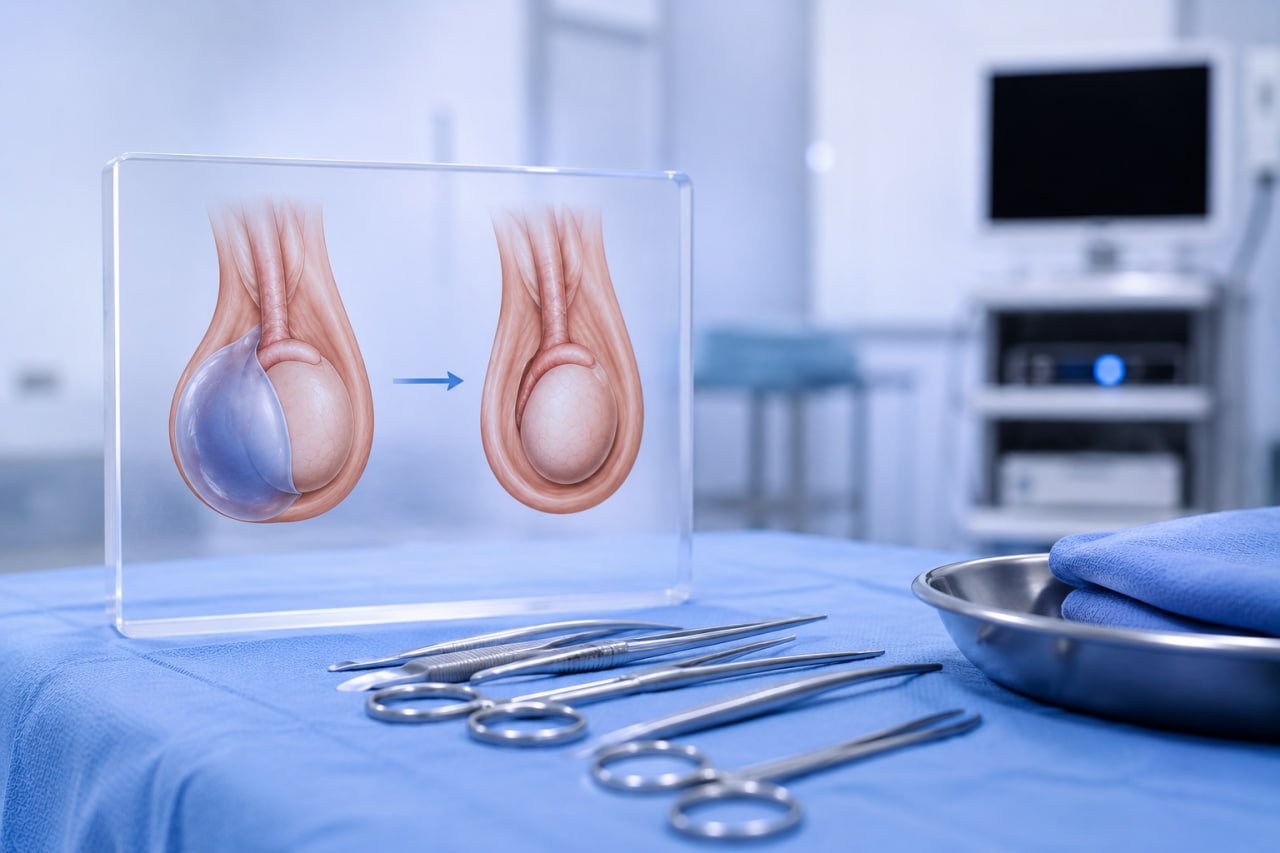
Hydrocele Surgery
What is hydrocele surgery?
Hydrocele surgery is a procedure performed to treat a hydrocele — a collection of fluid around the testicle that causes swelling within the scrotum. Although hydroceles are usually harmless, they can become uncomfortable, enlarge over time, or cause inconvenience in daily activities.
The operation involves draining the fluid and removing or repairing the lining that causes the fluid build-up, helping to prevent recurrence. The procedure is usually performed through a small incision in the scrotum under general anaesthetic.
Hydrocele surgery is commonly carried out as a day-case procedure.
Indications for hydrocele surgery
Hydrocele surgery may be recommended for patients with:
- Persistent scrotal swelling
- Discomfort or heaviness in the scrotum
- Increasing size of the hydrocele
- Difficulty with physical activity or clothing
- Cosmetic concerns
- Uncertainty regarding the diagnosis requiring surgical assessment
Advantages of having hydrocele surgery performed privately
- Rapid access to specialist assessment and surgery
- Consultant-led care throughout treatment
- Day-case procedure in most cases
- Personalised follow-up and continuity of care
- Reduced waiting times and flexible appointments
- Modern surgical techniques focused on comfort and recovery
Possible side effects and risks
As with any surgical procedure, hydrocele surgery carries some risks. Possible side effects and complications include:
- Swelling or bruising of the scrotum temporarily
- Mild pain or discomfort after surgery
- Bleeding or haematoma (collection of blood)
- Wound infection
- Fluid recurrence over time
- Temporary firmness or thickening around the testicle
- Injury to surrounding structures affecting the testicle (rare)
- Chronic discomfort or sensitivity (uncommon)
Recovery and what to expect
Most patients return home the same day. Mild swelling and bruising are common during the early recovery period and usually settle gradually over several weeks. Supportive underwear and avoiding strenuous activity or heavy lifting for a short period are often recommended.
Most patients return to normal daily activities within 1–2 weeks, although full resolution of swelling may take longer. Follow-up is arranged to ensure appropriate healing and recovery.