
REZUM Water Vapour Therapy
A minimally invasive REZUM prostate treatment using steam to shrink the prostate, offering quicker recovery and fewer side effects.
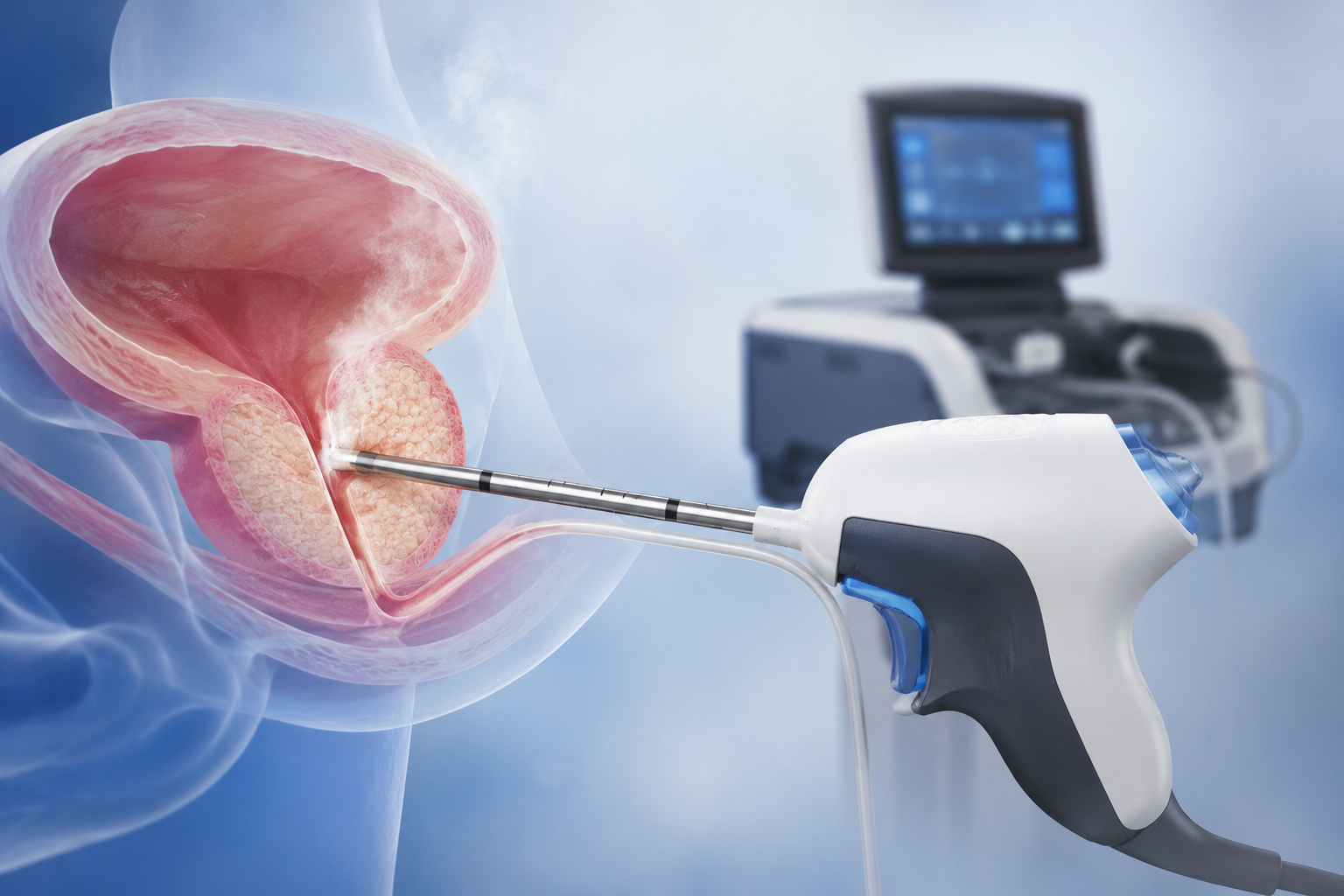
REZUM Water Vapour Therapy
What is Rezūm therapy?
Rezūm is a minimally invasive treatment for an enlarged prostate (benign prostatic enlargement). The procedure uses targeted water vapour (steam) to reduce excess prostate tissue that is blocking the flow of urine. Over time, the treated tissue is naturally absorbed by the body, improving urinary symptoms while preserving surrounding structures.
The treatment is performed using a small instrument passed through the penis, so there are no external cuts or scars. Rezūm is usually carried out as a day-case procedure.
Indications for Rezūm therapy
Rezūm may be suitable for men who experience urinary symptoms caused by an enlarged prostate, including:
- Weak urinary stream
- Difficulty starting urination
- Frequent urination
- Urgency
- Getting up multiple times at night to pass urine
- Incomplete bladder emptying
It is often considered for patients who:
- Wish to avoid long-term medication
- Prefer a minimally invasive alternative to surgery
- Want to preserve sexual function where possible
- May not be suitable for more invasive surgery
Suitability depends on prostate size, symptoms, overall health, and previous treatments.
Advantages of having Rezūm performed privately
- Rapid access to specialist assessment and treatment
- Consultant-led care throughout
- Minimally invasive day-case procedure
- Short recovery time compared with traditional surgery
- Lower risk of sexual side effects compared with some surgical treatments
- Personalised follow-up and continuity of care
- Flexible appointment scheduling with reduced waiting times
Possible side effects and risks
Most side effects are temporary and improve as healing occurs. Possible side effects include:
- Burning or discomfort when passing urine
- Frequent urination or urgency during recovery
- Blood in the urine or semen temporarily
- Urinary tract infection
- Temporary need for a urinary catheter after treatment
- Difficulty passing urine during the healing phase
- Pelvic discomfort
- Rarely, need for further treatment if symptoms recur or persist
Recovery and what to expect
Most patients return home the same day. A urinary catheter is commonly required for a few days after the procedure while swelling settles. Symptoms may temporarily worsen before improving, and benefits are usually noticed gradually over several weeks. Most patients can return to normal daily activities within a few days, although strenuous activity should be avoided during early recovery.