
Ureteroscopy and Laser Stone Removal
A keyhole procedure for kidney stone removal using laser technology, with minimal downtime.
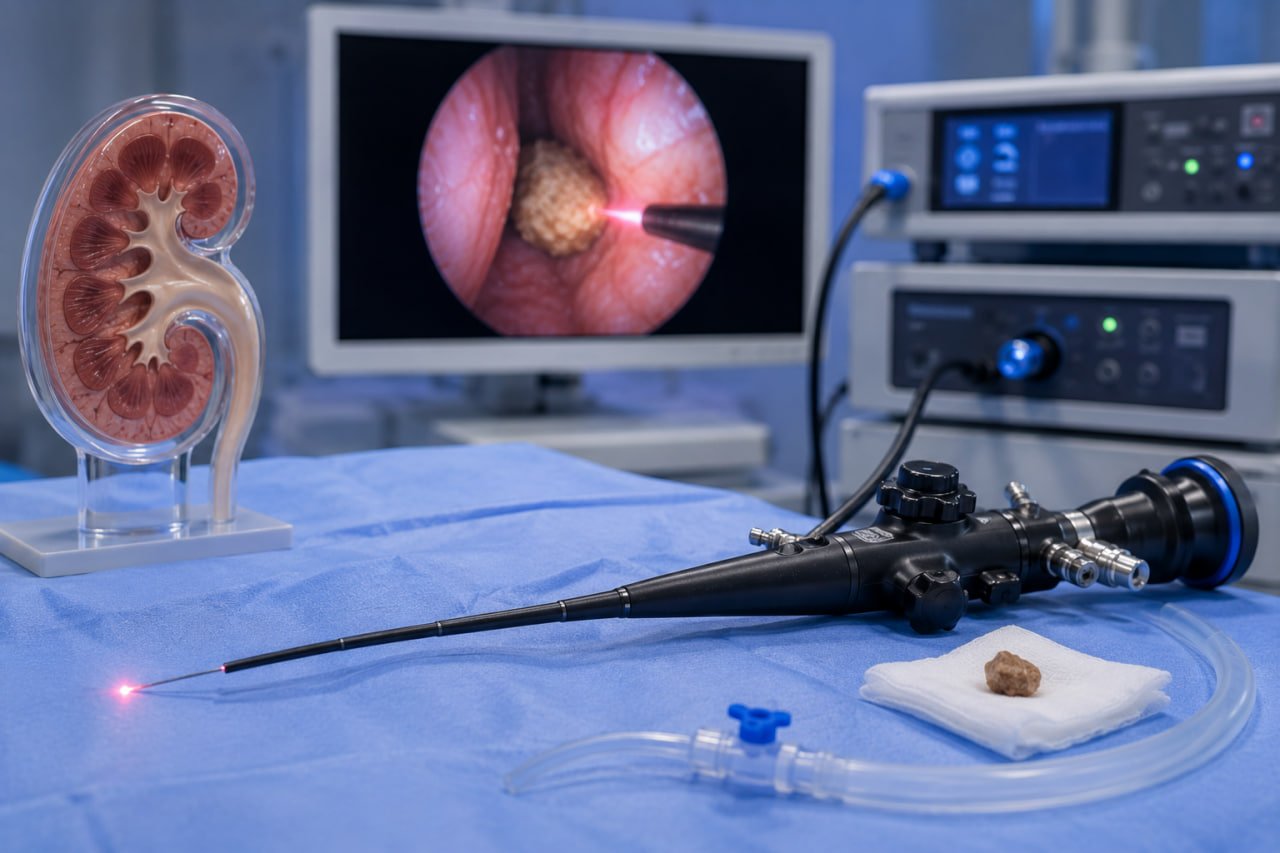
Ureteroscopy and Laser Stone Removal
What is ureteroscopy and laser stone removal?
Ureteroscopy and laser stone removal is a minimally invasive procedure used to treat stones in the kidney or ureter (the tube connecting the kidney to the bladder). A fine telescope is passed through the urinary passage without any external cuts or incisions.
Once the stone is identified, a laser is used to break it into smaller fragments, which can either be removed or passed naturally in the urine. In many cases, a temporary ureteric stent is placed to help drainage and healing after the procedure.
The operation is usually performed under general anaesthetic as a day-case or overnight stay.
Indications for ureteroscopy and laser stone removal
This procedure may be recommended for patients with:
- Kidney stones causing pain or blockage
- Ureteric stones
- Recurrent urinary infections related to stones
- Blood in the urine caused by stones
- Stones unlikely to pass naturally
- Persistent symptoms despite medical treatment
- Stones unsuitable for shockwave treatment
Advantages of having laser stone treatment performed privately
- Rapid access to assessment and treatment
- Consultant-led care throughout
- Minimally invasive treatment with no external incisions
- Advanced laser technology for precise stone treatment
- Short hospital stay and faster recovery
- Reduced waiting times for surgery and imaging
- Personalised follow-up and stone prevention advice
Possible side effects and risks
As with any procedure, there are potential risks and side effects, including:
- Burning or discomfort when passing urine temporarily
- Blood in the urine for a short period
- Urinary tract infection
- Flank discomfort, particularly if a stent is inserted
- Temporary urinary frequency or urgency
- Need for a temporary ureteric stent
- Incomplete stone clearance requiring further treatment
- Injury or narrowing of the ureter (rare)
- Sepsis or severe infection (uncommon but serious)
Recovery and what to expect
Most patients return home the same day or after an overnight stay. Mild discomfort and temporary urinary symptoms are common for several days after treatment. If a ureteric stent is used, this may cause urinary frequency, urgency, or flank discomfort until it is removed.
Patients are encouraged to drink plenty of fluids and avoid strenuous activity for a short period after surgery. Follow-up may include imaging to confirm stone clearance and discussion of strategies to reduce the risk of future stone formation.