
Vasectomy (Male Sterilisation)
A safe and effective vasectomy procedure in Manchester, performed as a quick day-case treatment.
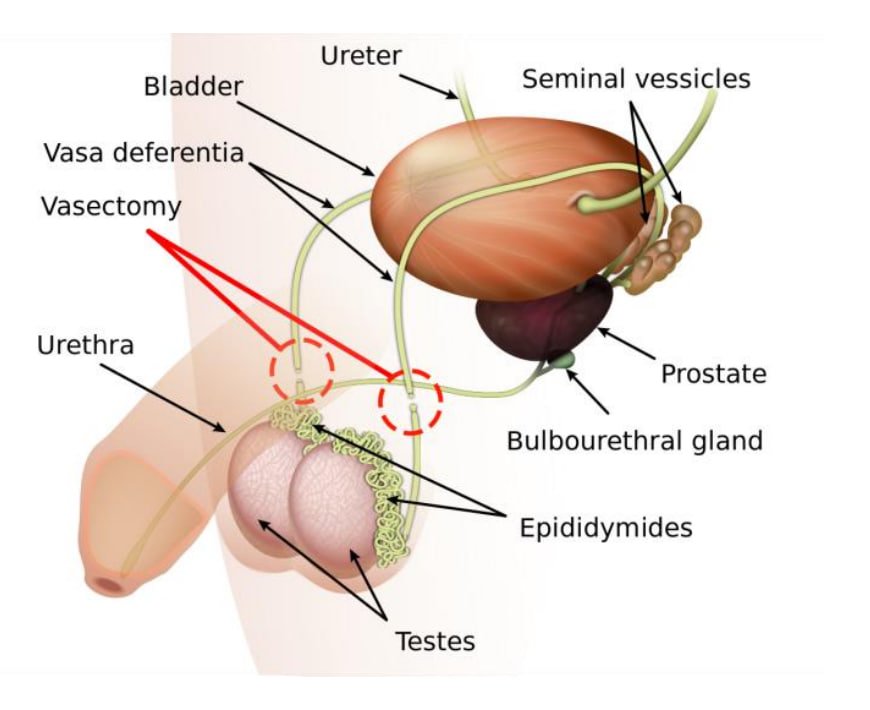
Vasectomy (Male Sterilisation)
What is a bilateral vasectomy?
A bilateral vasectomy is a permanent form of male contraception. The procedure involves dividing and sealing the vas deferens — the tubes that carry sperm from the testicles — to prevent sperm from being released during ejaculation.
The operation is usually performed under local anaesthetic through very small openings in the scrotal skin, often without the need for stitches. A vasectomy does not affect testosterone levels, sexual function, erections, or ejaculation.
The procedure is commonly carried out as a day-case treatment.
Indications for bilateral vasectomy
A vasectomy may be suitable for men who:
- Want permanent contraception
- Have completed their family
- Prefer a reliable long-term contraceptive option
- Wish to avoid female contraceptive procedures or long-term contraception
Patients should be certain about their decision, as reversal procedures are not always successful.
Advantages of having vasectomy performed privately
- Rapid access to consultation and treatment
- Consultant-led care throughout
- Minimally invasive procedure with quick recovery
- Flexible appointments with reduced waiting times
- Personalised counselling and follow-up
- Discreet and confidential care
Possible side effects and risks
Vasectomy is generally very safe, but potential side effects and complications include:
- Mild pain, swelling, or bruising of the scrotum
- Small risk of bleeding or haematoma
- Wound infection
- Temporary discomfort during recovery
- Chronic testicular discomfort or pain (uncommon)
- Failure of the procedure resulting in ongoing fertility (rare)
- Reconnection of the tubes over time leading to failure (very rare)
It is important to understand that contraception is not immediate after vasectomy. Alternative contraception must be continued until semen testing confirms the absence of sperm.
Recovery and what to expect
Most patients return home shortly after the procedure and resume light activities within a few days. Mild discomfort and bruising are common and usually settle quickly. Heavy exercise and strenuous activity should be avoided for approximately 1–2 weeks.
A semen analysis is arranged several weeks after the procedure to confirm success. Alternative contraception should continue until clearance is confirmed.